

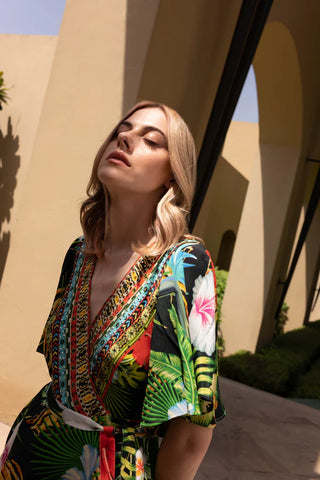

When it comes to effortless elegance and warm weather dressing, kimono dresses and kaftan dresses are two of the most loved silhouettes in modern resort wear. Both are known for comfort, fluid movement, and a relaxed sense of luxury, yet they serve slightly different purposes depending on body type, styling preference, and occasion.
If you have ever wondered whether a kimono or a kaftan suits you better, the answer lies in understanding how each silhouette works, not just how it looks. Choosing the right style can elevate your outfit while making you feel confident and comfortable.
Understanding the Difference Between Kimono and Kaftan Silhouettes
At first glance, kimonos and kaftans may seem similar, but their construction sets them apart. Kaftan dresses are typically more fluid and open in shape. They fall straight from the shoulders, creating a loose, airy silhouette that prioritises movement and breathability.
Kimono dresses, on the other hand, often have more structure through the sleeves, seams, or waist area. While still relaxed, kimono silhouettes tend to offer slightly more definition, which can create a refined and tailored appearance without feeling restrictive.
Both styles are central to luxury resort wear dresses, but they flatter the body in different ways.
Which Style Works Best for Different Body Types
Kaftans are universally flattering because they do not cling to the body. Their loose structure makes them ideal for women who prefer freedom of movement or want a silhouette that feels forgiving and effortless. Kaftans are especially popular among women who enjoy modest dresses for women that offer coverage without heaviness.
For women with curvier body shapes, kaftan dresses create balance by skimming rather than shaping the body. They allow comfort while still looking elegant, making them a strong choice for warm climates and relaxed occasions.
Kimono dresses work beautifully for women who prefer a little more shape. The sleeve structure and optional waist detailing can highlight proportions while still maintaining a soft, flowing feel. If you enjoy outfits that feel relaxed but slightly more defined, kimono dresses offer that middle ground between structure and ease.
Choosing Based on Occasion
Occasion plays a major role when deciding between a kimono and a kaftan. Kaftans are ideal for daytime wear, resort lounging, travel days, and casual gatherings. Their relaxed silhouette makes them perfect for environments where comfort is key, such as beach resorts, poolside lunches, or leisurely city outings.
Kimono dresses feel especially suited for occasions that call for a more polished appearance. They work well for resort dinners, evening celebrations, and social gatherings where you want to look refined without dressing formally.
For weddings or special events, both styles can work depending on fabric and styling. Flowing kaftans crafted in silk blends feel elegant for destination weddings, while structured kimono dresses create a sophisticated evening look.
Fabric and Movement Matter
Fabric choice can transform both silhouettes. Silk kaftan dresses feel light, breathable, and luxurious, making them ideal for hot climates and long wear. Their movement enhances the fluid nature of the kaftan silhouette, creating an effortless sense of elegance.
Kimono dresses also benefit from high quality fabrics such as soft crepe, silk blends, or satin finishes. These materials enhance structure while maintaining comfort. Fabric flow is especially important in kimono styles, as it defines how the dress moves and sits on the body.
When browsing kaftan dresses or kimono dresses, always consider how the fabric behaves in motion, not just how it looks on a hanger.
Styling Differences Between Kimono and Kaftan
Styling is where the distinction becomes clearer. Kaftans typically require minimal styling. Flat sandals, subtle jewellery, and natural makeup are often enough. For evening, a kaftan can be elevated with statement earrings and refined footwear while still maintaining its relaxed appeal.
Kimono dresses respond well to styling details. Belts, structured bags, and layered accessories can enhance their shape and make them evening-ready. This makes kimono styles particularly versatile for women who enjoy experimenting with their looks.
Both silhouettes pair beautifully with resort wear accessories and transition seamlessly from day to night when styled thoughtfully.
Modesty and Modern Fashion Balance
Both kimono and kaftan dresses align naturally with modest fashion preferences. Kaftans offer coverage through volume and length, while kimono dresses achieve modesty through sleeves and balanced proportions.
For women seeking modern modest luxury, the choice often depends on personal comfort. Kaftans feel freer and more relaxed, while kimono dresses feel composed and slightly more structured. Both styles allow women to dress confidently without compromising elegance.
Making the Right Choice for Your Wardrobe
Rather than choosing one over the other, many women build wardrobes that include both kimono and kaftan styles. Kaftans become go to pieces for travel, daytime wear, and relaxed settings, while kimono dresses serve as versatile options for evenings and refined occasions.
When shopping for luxury resort wear dresses, consider how often you will wear the piece, the climate you live in or travel to, and how much structure you prefer in your outfits.
Final Thoughts
Choosing between a kimono and a kaftan is not about rules, it is about understanding your body, lifestyle, and the moments you dress for. Kaftans offer unmatched ease and breathability, while kimono dresses bring subtle structure and refined elegance.
Both silhouettes have earned their place in modern resort wear. When chosen thoughtfully, they complement each other beautifully, allowing you to dress with confidence, comfort, and style for any occasion.