

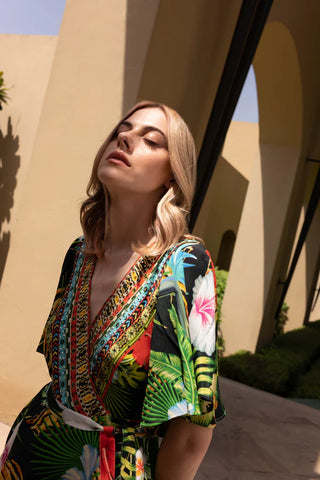

Kaftan dresses and kimono dresses are two of the most loved silhouettes in modern resort and modest luxury fashion. Both are known for comfort, flowing structure, and elegant presence. Because they share relaxed shapes and cultural roots, many shoppers find it difficult to decide which one suits them better. The truth is, this is not a competition between styles. Each silhouette serves a slightly different purpose, and the right choice depends on your body shape, occasion, and personal styling preference.
Understanding how kaftan and kimono dresses differ in fit, movement, and styling helps you choose with clarity and confidence.
Understanding the Core Silhouette Difference
The biggest difference between a kaftan and a kimono dress lies in construction.
A kaftan dress is usually cut as a more continuous, flowing shape. It often falls from the shoulders in a straight or gently flared line. The structure is minimal, which creates maximum ease and airflow. This makes kaftan dresses especially popular in warm climates and resort settings.
A kimono dress, by contrast, usually has more sleeve and shoulder definition. The cut often includes more visible seam structure and sometimes light waist shaping. While still relaxed, it feels a bit more tailored than a kaftan.
If you like very fluid, draped looks, kaftans may feel more natural. If you like a relaxed style with a light structure, kimono dresses may feel more aligned.
Fit Feel, Flowing vs Lightly Structured
Fit experience is where many women notice the real difference.
Kaftan dresses feel loose and airy on the body. They rarely cling and usually do not define the waist unless you add a belt. This makes them ideal for long wear days, travel, and hot weather. They are also a strong choice for women who prefer modest dresses for women that offer coverage without layering.
Kimono dresses still feel comfortable but offer a bit more shape. The sleeve cut and body panels can give gentle definition. Many women who want relaxed elegance without a fully loose outline prefer kimono silhouettes.
Neither fit is better; they simply serve different comfort and style preferences.
Body Shape Friendliness
Both styles are body-friendly, but in slightly different ways.
Kaftan dresses are especially forgiving across body types because they skim rather than follow the body. They work well for curvy, apple, and pear shapes, and for anyone who prefers not to highlight the waistline. Silk kaftan dresses, in particular, drape beautifully and flatter through movement.
Kimono dresses can be a great choice for women who like a bit more visual structure. If you enjoy subtle shapes at the shoulders or a lightly defined waist, kimono styles often deliver that without tightness.
Petite women sometimes find kimono dresses easier to balance visually, while taller women often carry dramatic kaftan silhouettes beautifully. But with the right length and fabric, both can work across heights.
Occasion Suitability
Occasion is another helpful guide when choosing between the two.
Kaftan dresses are perfect for
resort days
travel outfits
relaxed gatherings
warm weather events
lounging in style
Their ease makes them ideal for settings where comfort leads, but elegance is still desired. This is why they are a foundation in luxury resort wear dress collections.
Kimono dresses often feel slightly more occasion-ready out of the box. They work well for
resort dinners
evening events
social gatherings
smart casual settings
Because they carry a bit more structure, they can look polished with very minimal styling effort.
Styling Approach Differences
Kaftan styling usually focuses on enhancement rather than shaping. Accessories, jewellery, and footwear elevate the look while the dress remains loose. Belts can be added when waist definition is desired, but they are optional.
Kimono dress styling often plays with shape and layers. Belts, structured bags, and refined footwear pair especially well. Kimono styles also layer nicely over slips or base dresses, similar to kimono-inspired resort layers.
Both silhouettes work beautifully with minimal styling, which is why they are favourites in modern luxury wardrobes.
Fabric Impact on Both Styles
Fabric choice strongly affects how each silhouette behaves.
In kaftans, fluid fabrics like silk, silk blends, and premium viscose enhance the signature flow. Silk kaftan dresses are especially valued because they move elegantly and feel cool on the skin.
In a kimono dress, the fabric can shift the mood. Soft fabrics keep the look relaxed, while slightly heavier crepe or satin blends increase structure and formality.
If you want maximum movement, lean toward softer textiles in either style. If you want more outline and polish, choose fabrics with a bit more body.
When You Might Choose One Over the Other
You might prefer a kaftan dress when you want
maximum comfort
loose airflow
forgiving fit
resort and travel ease
strong modest coverage
You might prefer a kimono dress when you want
relaxed but shaped silhouette
easy evening polish
defined sleeves and shoulders
layer-friendly styling
Many women find the best solution is not choosing one, but owning both.
Final Thoughts, Style Choice Not Style Competition
Kaftan vs kimono dress is not about which is better; it is about which serves your moment, mood, and body best. Kaftans offer unmatched flow and ease. Kimono dresses offer relaxed structure and quiet polish. Both belong naturally in modern resort and modest luxury wardrobes.
When chosen in quality fabrics and thoughtful cuts, both silhouettes deliver elegance without effort. The smartest wardrobe includes the freedom of kaftans and the refined ease of kimonos, giving you options for every occasion.